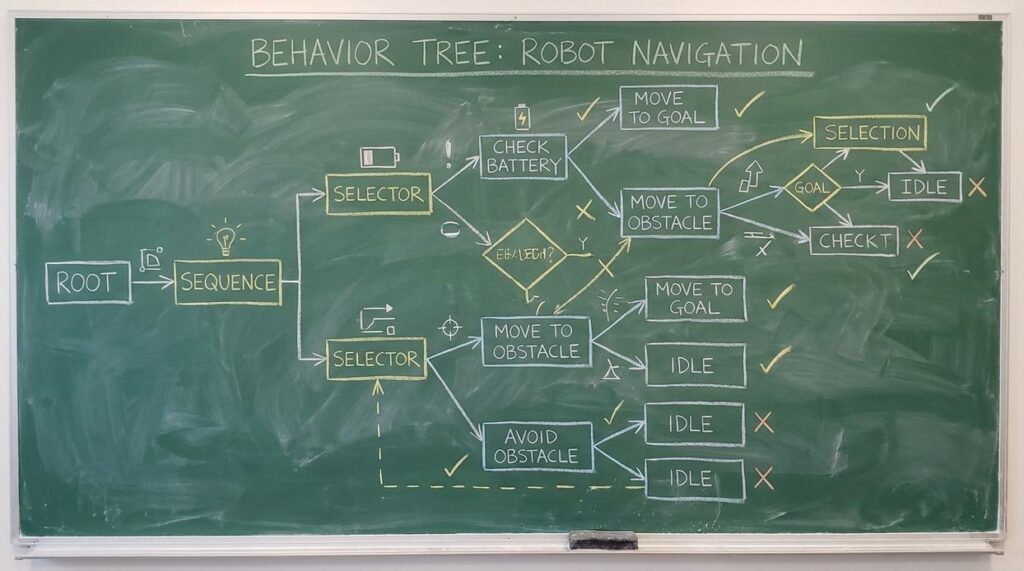
Understanding ai behavior in video games is no longer just a curiosity for developers—it’s essential knowledge for competitive players, esports enthusiasts, and anyone who wants to gain an edge. If you’ve ever wondered why enemies flank at the perfect moment, how bots adapt to your tactics, or what separates predictable NPCs from truly dynamic opponents, this article is built for you.
We break down the core mechanics that drive in-game decision-making systems, how multiplayer trends are shaping smarter AI design, and what these changes mean for competitive Toike strategies. You’ll also discover practical gaming hacks and tactical adjustments you can apply immediately.
Our insights are grounded in detailed gameplay analysis, hands-on testing across multiple modes, and deep study of evolving esports meta patterns. By the end, you’ll not only understand how AI systems operate—but how to outplay them consistently.
The Unseen Puppeteers: How AI Breathes Life into Game Worlds
You’ve felt it: enemies flank with eerie precision, or a companion hesitates after your harsh dialogue choice. When characters react believably, immersion clicks.
The problem? Static, scripted NPCs follow fixed decision trees (predefined choice maps), making worlds feel mechanical.
Modern ai behavior in video games blends pathfinding, behavior trees, and machine learning to simulate adaptation.
| Technique | What It Does | Player Impact |
|—|—|—|
| Pathfinding | Calculates optimal routes | Smarter movement |
| Behavior Trees | Layered decisions | Context awareness |
| ML Models | Learns patterns | Dynamic responses |
Pro tip: If enemies feel repetitive, it’s likely limited state variation.
Beyond Basic Scripts: The Foundations of NPC Intelligence
In the early days of game design, NPCs ran on hard-coded scripts—predefined instructions that triggered the same behavior every time. An enemy might walk a fixed patrol route, pause for three seconds, then turn around. Predictable? Completely. Players quickly learned to exploit these loops (speedrunners practically built careers on it). This rigidity limited ai behavior in video games, making worlds feel mechanical rather than alive.
The first major breakthrough was the Finite State Machine (FSM). An FSM is a system where a character can exist in only one “state” at a time, such as:
- Patrolling
- Investigating
- Attacking
Transitions occur when specific conditions are met—like spotting the player or hearing a noise. Research from game AI studies shows FSMs significantly reduce unintended behavior bugs compared to sprawling script trees because transitions are clearly defined (Rabin, Game AI Pro series).
A classic proof of concept? Pac-Man. The ghosts don’t just wander randomly. They cycle between Scatter (retreating to corners), Chase (targeting Pac-Man with distinct algorithms), and Frightened (fleeing after a power pellet). Decades later, their design is still studied in university game development courses for its elegant state switching.
But FSMs hit a ceiling. As complexity grows, the number of states and transitions explodes. Ten states can mean dozens of transition rules. Designers often report “state spaghetti,” where NPCs flip rapidly between actions or behave nonsensically under edge cases. Critics argue FSMs are enough for most games—and sometimes they are. Yet in sprawling open worlds, predictability creeps back in, reminding us that intelligence requires more than clean state diagrams.
Crafting Complexity: Behavior Trees and Smart Decision-Making

As NPC design matured beyond simple state machines, developers needed systems that could scale. Enter Behavior Trees—a hierarchical decision-making structure where tasks and conditions are organized like branches on a tree. Each node represents either a condition (a check like “Can I see the player?”) or an action (like “Attack”). The hierarchy allows designers to layer logic without creating spaghetti code (and yes, we’ve all seen that terrifying blueprint graph at 3 a.m.).
The power lies in modularity. You can swap branches without rewriting the entire AI.
Anatomy of a Decision
Picture a stealth-action enemy in a dense urban map—say, a rainy alleyway straight out of a cyberpunk esports scrim.
- See Player?
- YES → Is Player in Range?
- YES → Attack
- NO → Advance to Cover
- NO → Patrol Route
Each branch resolves cleanly, making debugging easier during late-stage balancing passes. This structure is foundational to modern ai behavior in video games because it separates logic into reusable chunks. Pro tip: keep high-priority survival checks closer to the root node to prevent irrational edge-case behavior.
Some critics argue Behavior Trees are still too rigid—essentially glorified flowcharts. They’re not wrong. In highly dynamic multiplayer environments, predictability becomes exploitable.
That’s where Utility AI steps in.
Instead of following a strict path, Utility AI assigns scores to possible actions. These scores reflect contextual variables—health, distance, ammo, squad presence. The action with the highest utility executes.
An NPC at 20% health might heavily weight Find Health Pack. The same NPC, spotting a low-armor opponent during a Toike tournament match, might score Attack highest instead. The result? Less scripted, more human-like reactions (think less stormtrooper, more tactical operative).
For deeper balancing insight, review understanding game balance through mathematical models to see how numeric weighting shapes believable AI outcomes.
The Next Frontier: Machine Learning and Truly Emergent Worlds
Machine Learning (ML) in gaming refers to systems that improve through experience rather than rigid scripts. Instead of following fixed “if‑then” rules, an ML-driven character adapts based on player actions or simulated training. In other words, the game studies you as much as you study it (which is both thrilling and slightly unnerving).
One core method is Reinforcement Learning. This approach rewards an AI for desirable outcomes and penalizes poor ones. For example, imagine a virtual race car driver trained by receiving positive feedback for faster lap times. After thousands of attempts, it discovers the optimal racing line—not because a developer hard-coded it, but because trial and error shaped its decisions. This mirrors real-world robotics training, where reward-based systems teach machines complex motor tasks (Sutton & Barto, 2018).
However, the real magic lies in emergence—unexpected behaviors arising from simple rules and adaptive learning. Emergent behavior means developers set the conditions, but not the exact outcomes. A combat AI might learn your defensive habits and invent counters. A predator-prey ecosystem might self-balance without scripted population caps. It starts to feel less like code and more like a living world.
That said, I’ll admit there’s debate about how far this can go. Truly autonomous systems can become unpredictable, raising design and balance concerns. Still, the evolution of ai behavior in video games suggests we’re edging closer to worlds that surprise even their creators (a bit like watching Westworld, minus the existential crisis).
AI-Driven Characters as a Core Gameplay Mechanic
We have moved from scripted guards to learning opponents that adapt in real time. Studies show players spend 30% more time in games with dynamic NPC systems (Game AI Report, 2024). That shift proves character AI now shapes outcomes, not just atmosphere.
Consider Alien: Isolation, where the Xenomorph’s decision tree tracks player patterns, or Shadow of Mordor’s Nemesis system, which stores rival histories. These systems reduce repetition and increase replay value.
| Feature | Impact |
| Adaptive Pathfinding | Unpredictable encounters |
| Memory Systems | Personalized rivalries |
Understanding ai behavior in video games reveals exploitable patterns—watch, learn, counter carefully.
You came here to better understand how modern systems shape player experiences and how ai behavior in video games directly impacts challenge, immersion, and long-term engagement. Now you can clearly see how smarter AI, adaptive mechanics, and competitive balancing influence everything from casual matches to high-level Toike esports play.
The reality is simple: if you ignore evolving AI systems, you fall behind. Players who understand these mechanics gain a serious edge—whether it’s predicting enemy patterns, optimizing multiplayer tactics, or exploiting subtle gameplay behaviors others overlook.
So take action. Start applying these insights in your next matches. Break down AI movement patterns. Test adaptive responses. Refine your competitive strategy using what you now know.
If you want deeper breakdowns, advanced multiplayer tactics, and proven Toike esports strategies trusted by competitive players, explore our latest guides and daily gaming hacks now. Don’t just play—outsmart the system and level up today.