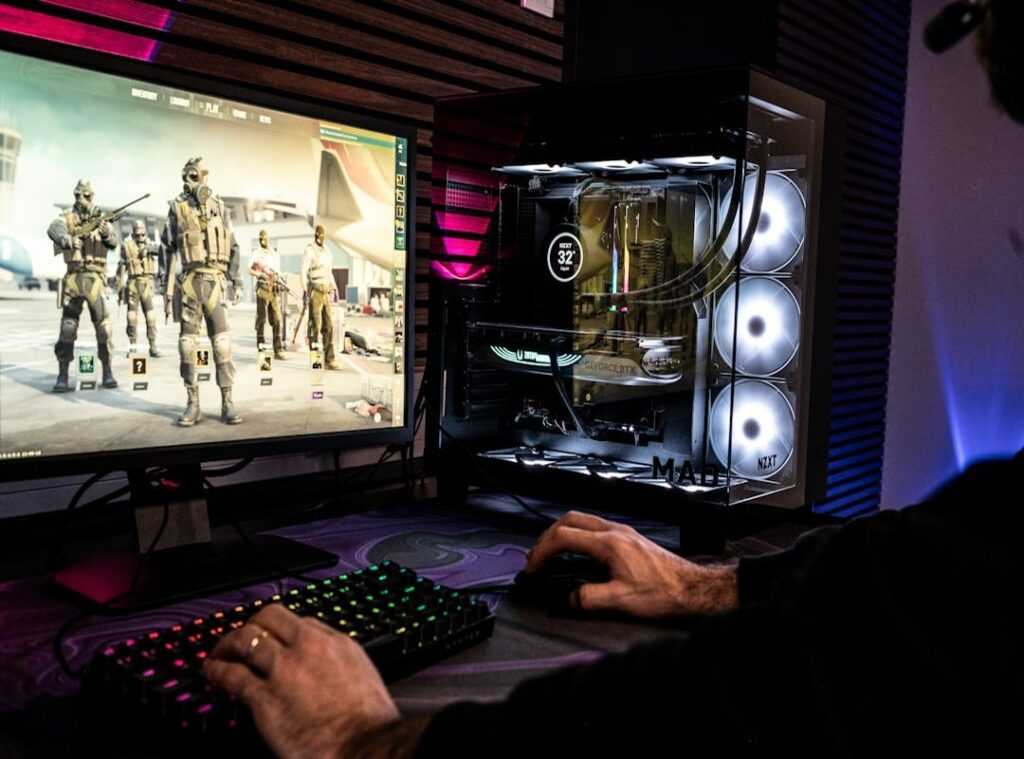

If you’re searching for deeper insight into what truly drives competitive gaming today, you’re in the right place. Modern players don’t just want flashy graphics—they want systems that reward mastery, strategy, and smart decision-making. This article breaks down the core game mechanics shaping today’s multiplayer environments, examines evolving Toike esports strategies, and shares practical daily gaming hacks that actually improve performance.
We focus on what matters most to serious players: how skill based game design influences competitive balance, player progression, and long-term engagement. You’ll gain clear, actionable breakdowns of mechanics that separate casual play from high-level execution, along with trend analysis that explains where multiplayer competition is heading next.
Our insights are grounded in hands-on analysis of gameplay systems, competitive trends, and real match scenarios—so you’re not getting theory alone, but practical guidance you can apply immediately. Whether you’re refining strategy or studying the meta, this guide delivers the clarity and edge you’re looking for.
Beyond Luck: Architecting Games of True Player Agency
Early in my design experiments, I mistook randomness for excitement. Players won, but they didn’t improve. Eventually, they left. That failure taught me a hard truth: without meaningful decisions, luck becomes a ceiling, not a hook.
So what changed? I shifted toward skill based game design—systems where outcomes reflect mastery, not dice rolls. In other words, execution (mechanical precision) and strategy (long-term planning) must both matter. Chess endures for this reason; roulette doesn’t.
However, balance is critical. Too much complexity overwhelms. Too little depth bores. The lesson? Reward learning curves, not coin flips.
The core dichotomy in competitive games separates mechanical skill from strategic depth, and understanding that split has shaped design conversations since the early days of esports in the 2000s. Mechanical skill refers to execution, timing, and precision: landing headshots in an FPS, performing a frame-perfect combo in a fighting game, or last-hitting minions in a MOBA. It is the player’s ability to translate intent into flawless action under pressure (and yes, sweaty palms count). Strategic depth, by contrast, is about decision-making, planning, and adaptation over time. Think resource management in an RTS, team composition in a hero shooter, or long-term map control.
After months of balance patches in 2019, many studios realized that leaning too hard on one side creates problems. Raw aim without foresight collapses against superior planning, while brilliant strategies fail if players cannot execute them. The best systems make these elements interdependent, a hallmark of skill based game design.
Designers should aim to deliver moments where players feel both smart for their decisions and skilled for their actions.
- Great strategy demands execution.
- Great mechanics demand direction.
When victory feels earned, not random, the design has succeeded. Luck should complement mastery, never replace it. Over time.
Pillars of Mechanical Expression: How to Make Skill Feel Good
Great mechanics don’t just function—they feel right. At the core is input purity: the clean, near-instant translation of player intent into on-screen action. Low input lag (the delay between pressing a button and seeing the result) creates that coveted 1:1 responsiveness. Think of the difference between a tight platformer and a “clunky” one where jumps feel half a beat late (and suddenly every missed ledge feels unfair). Some argue cinematic weight justifies slower controls. And yes, realism can add immersion. But when responsiveness suffers, mastery does too.
High skill ceilings are another pillar. These are systems that are easy to grasp yet difficult to perfect. Consider:
- Animation canceling to optimize attack timing
- Bunny-hopping to preserve momentum
- Perfect parrying with frame-tight windows
Critics sometimes say advanced tech alienates casual players. That’s valid—depth can intimidate. However, layered mechanics let beginners participate while giving veterans room to grow. It’s the chess principle: simple rules, infinite mastery (no one complains chess is too deep).
Clear audio-visual feedback seals the deal. A sharp metallic clang on a perfect parry or a distinct hit spark confirms success instantly. This feedback loop reinforces competence. Without it, even skillful play feels muted.
Finally, risk vs. reward. High-skill maneuvers should offer strong advantages—but real consequences on failure. A missed parry might mean massive damage taken. Some designers prefer minimizing punishment to reduce frustration. Yet without stakes, triumph feels hollow. True skill based game design thrives on meaningful risk, because tension is what makes victory unforgettable.
Blueprints for Strategy: Forcing Meaningful Choices

Great strategy games force players to make hard trade-offs. To do that, you must design around information, resources, counters, and time horizons—each acting as pressure points that shape decisions.
First, consider information warfare. Fog of war (a system that hides parts of the map or enemy activity) turns scouting into a strategic investment rather than a chore. When players gather intel—through drones, wards, or reconnaissance units—they reduce uncertainty. Conversely, denying information through stealth or misinformation creates opportunity windows. For example, in competitive RTS titles, a hidden tech switch can win games outright (until opponents start scouting religiously). Pro tip: limit perfect information; uncertainty creates tension and rewards preparation.
Next comes resource management. Currency matters, but so do cooldowns (time before an ability can be reused), ammunition, map position, and even player attention. A sniper holding high ground controls space. A team that burns all abilities in one fight may lose the next. Treat attention as finite—overloading players with alerts or objectives weakens meaningful play. Use skill based game design to ensure victories stem from mastery, not resource hoarding alone.
Counter-play and asymmetrical balance prevent stagnation. The classic “Rock–Paper–Scissors” philosophy ensures every dominant strategy has a weakness. If heavy armor beats light infantry, armor-piercing tools must exist. Otherwise, metas calcify (and players quit). For deeper insight, explore breaking down advanced combat systems in modern games.
Finally, balance short-term gains against long-term plans. Do players secure immediate objectives or invest in scaling advantages? The tension between “win now” and “win later” keeps strategy alive—and endlessly debatable.
Balancing for Esports: The Competitive Integrity Checklist
Start with an anecdote about a tournament match I lost to a lucky critical hit. That moment taught me the line between healthy variance (unpredictability that tests adaptability) and outcome-deciding luck. In skill based game design, RNG should reward risk, not replace mastery.
• Minimize swingy mechanics that erase preparation.
The meta (dominant strategies players gravitate toward) must evolve; regular balance patches keep it from feeling solved (looking at you, early MOBA mirrors).
Finally, spectator clarity matters:
• Telegraph plays so audiences instantly grasp skillful decisions, not hidden math.
Competition thrives on transparency.
From Concept to Classic
You now have the framework to separate luck from mastery. The real enemy is shallow mechanics—systems that feel fun for a week, then fade. If players aren’t making meaningful decisions, they leave (and they don’t come back).
So be INTENTIONAL. Start with one core loop and stress-test it. Ask: does execution improve with practice? Do choices create trade-offs?
This is where skill based game design shines. It rewards mechanical growth and strategic foresight.
Prototype one mechanic this week. Raise its ceiling. Add a counterplay option. Then observe retention metrics and player feedback carefully. Track results weekly.
Level Up Your Competitive Edge
You came here to better understand the mechanics, strategies, and trends shaping today’s competitive gaming landscape—and now you have the clarity to move forward with confidence. From mastering skill based game design principles to adapting to evolving multiplayer metas and Toike esports strategies, you’re no longer guessing. You’re making informed decisions.
The real challenge isn’t finding information—it’s knowing how to apply it before your opponents do. Falling behind on mechanics, daily optimization, or strategic adjustments can cost you wins, rankings, and momentum.
Now it’s time to act. Start refining your gameplay using these insights, apply smarter strategies in your next session, and stay consistent with daily performance tweaks. If you want proven breakdowns, advanced tactics, and trusted guidance relied on by serious players, dive deeper now and sharpen your edge today. Your next win starts with what you do next.
 Vynric Zephorin is the kind of writer who genuinely cannot publish something without checking it twice. Maybe three times. They came to multiplayer trends and meta shifts through years of hands-on work rather than theory, which means the things they writes about — Multiplayer Trends and Meta Shifts, Toike Esports Tactics and Team Plays, Daily Gaming Setup Hacks, among other areas — are things they has actually tested, questioned, and revised opinions on more than once.
That shows in the work. Vynric's pieces tend to go a level deeper than most. Not in a way that becomes unreadable, but in a way that makes you realize you'd been missing something important. They has a habit of finding the detail that everybody else glosses over and making it the center of the story — which sounds simple, but takes a rare combination of curiosity and patience to pull off consistently. The writing never feels rushed. It feels like someone who sat with the subject long enough to actually understand it.
Outside of specific topics, what Vynric cares about most is whether the reader walks away with something useful. Not impressed. Not entertained. Useful. That's a harder bar to clear than it sounds, and they clears it more often than not — which is why readers tend to remember Vynric's articles long after they've forgotten the headline.
Vynric Zephorin is the kind of writer who genuinely cannot publish something without checking it twice. Maybe three times. They came to multiplayer trends and meta shifts through years of hands-on work rather than theory, which means the things they writes about — Multiplayer Trends and Meta Shifts, Toike Esports Tactics and Team Plays, Daily Gaming Setup Hacks, among other areas — are things they has actually tested, questioned, and revised opinions on more than once.
That shows in the work. Vynric's pieces tend to go a level deeper than most. Not in a way that becomes unreadable, but in a way that makes you realize you'd been missing something important. They has a habit of finding the detail that everybody else glosses over and making it the center of the story — which sounds simple, but takes a rare combination of curiosity and patience to pull off consistently. The writing never feels rushed. It feels like someone who sat with the subject long enough to actually understand it.
Outside of specific topics, what Vynric cares about most is whether the reader walks away with something useful. Not impressed. Not entertained. Useful. That's a harder bar to clear than it sounds, and they clears it more often than not — which is why readers tend to remember Vynric's articles long after they've forgotten the headline.