Ever lost a match because your setup was a mess? It’s frustrating. A poor gaming environment drags you down, kills immersion, and makes gaming less fun.
You’re not alone in this struggle.
I know because I’ve been there, stuck in a drab den, losing games I should’ve won. But I’ve found a way around it. This guide promises a complete blueprint for gaming setup optimization.
We’re diving into everything. From your physical space to your digital settings and even the mental zone you play in.
Why trust this? I’ve spent thousands of hours in competitive play and setup experimentation. I’ve tested what works and what doesn’t.
You don’t have to. Ready to transform your environment? This article is your ticket to a pro-level gaming sanctum.
Level Up Your Lair: Crafting the Ultimate Battle Station
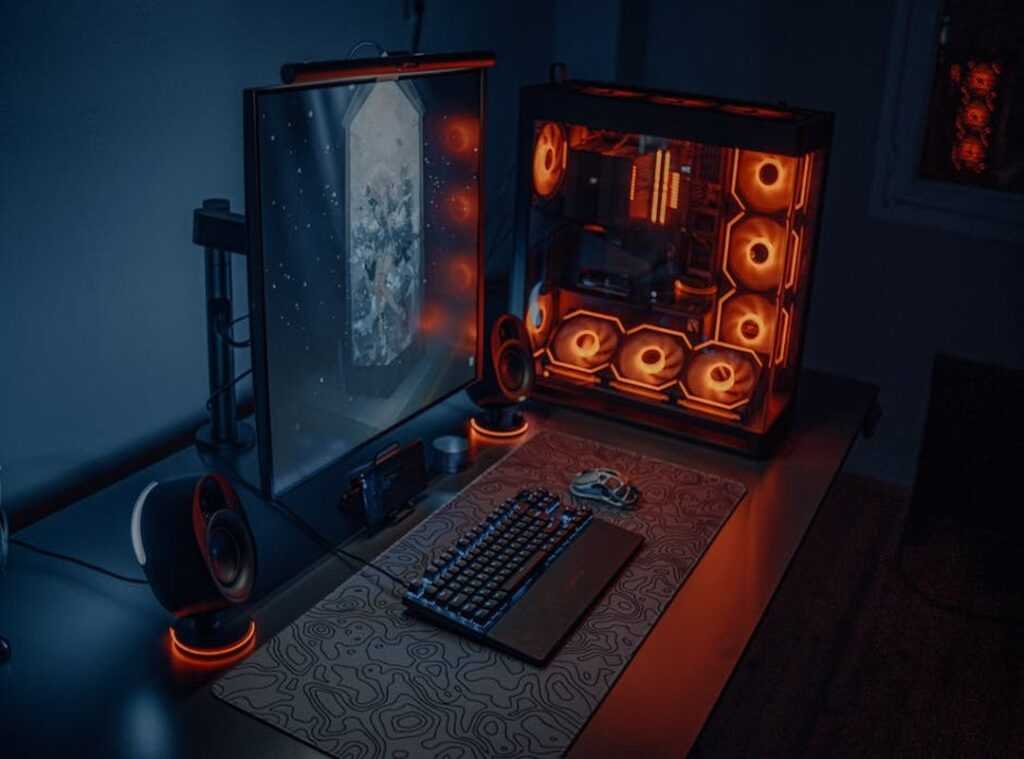
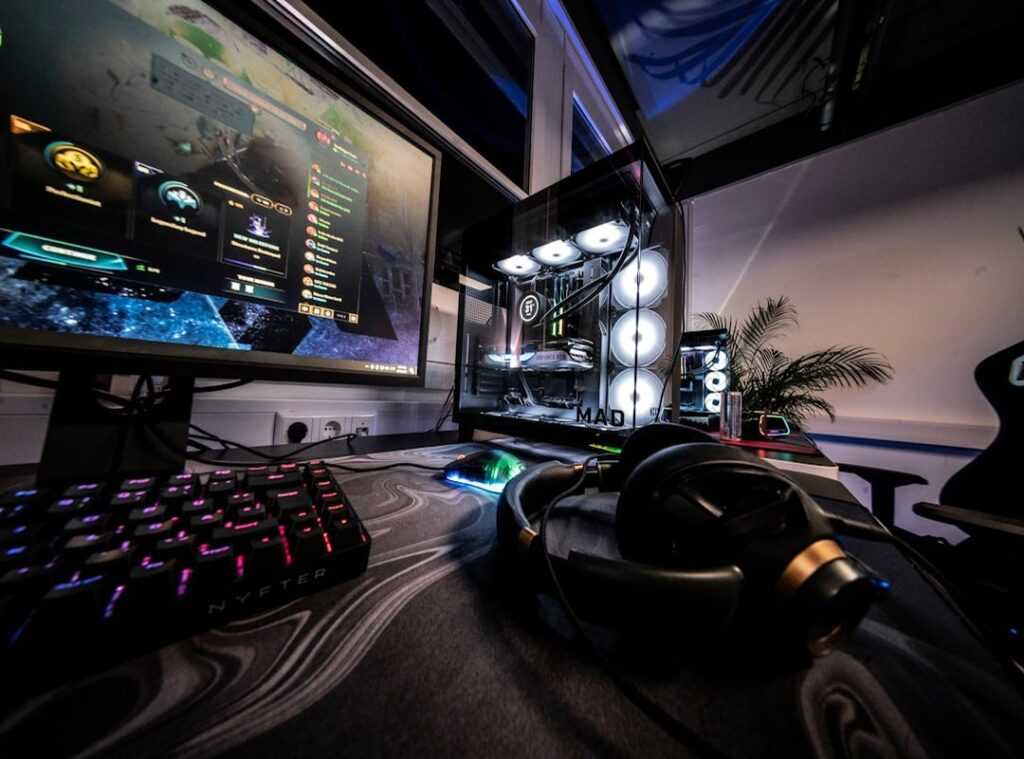
Let’s talk about the foundation of your gaming experience: your physical setup. It’s not just about flashy lights or impressive specs. It’s about the core elements that keep you in the game longer and stronger.
First, the throne you sit on (and I’m not talking about the porcelain kind). An ergonomic chair is about endurance. Seriously, it’s not just for comfort.
A good chair supports your back and neck, ensuring you can game for hours without feeling like you’re 90 years old. Think of it as a long-term investment in your health. If you’re on a budget, consider a quality lumbar pillow to boost your chair.
If you want to splurge, aim for a Secretlab or Herman Miller.
Next up, your command center: the desk. More space means more room for action. You need stability and space to spread out.
But beware the unseen enemy: cable clutter. It’s amazing how those cords can multiply and distract you. Use raceways and velcro ties to tame the chaos.
Install monitor arms to free up even more space. A tidy desk boosts your focus and looks sleek.
Let’s not forget the peripherals. These are extensions of you. A responsive mouse and mechanical keyboard make a difference.
But lighting? That’s a whole other beast. For the best lighting gaming environment, check out this guide.
They give you precision and control. Add a large mousepad for comfort, and you’re set. These small changes can turn your setup from functional to phenomenal.
Lighting impacts aesthetics but how you feel while gaming.
In short, gaming setup optimization is about creating a smooth, distraction-free environment. It’s about the tangible elements that form the backbone of your gaming adventures. You want a setup that supports your skills, not hinders them.
Ready to level up? Let’s do it.
Beyond the Box: Tweaking Your Software for Peak Performance
Hardware alone won’t cut it. You can have the best rig, but without optimized software, you’re just staring at an expensive paperweight. This is where the magic of tweaking comes in.
Moving from the physical to the digital world, let’s get those bits and bytes working for you.
If you’re on a PC, you know it’s all about the system-level tune-up. First, update those graphics drivers. Why?
Because outdated drivers are like using a floppy disk in a world of SSDs. Then there’s Game Mode in Windows (a lifesaver, honestly). It diverts resources to your game while shutting down other processes.
Finally, the task manager is your best friend. Use it to kill any background apps that are hogging resources.
Console gamers, don’t think you’re off the hook. Performance modes should be active. This isn’t just a setting; it’s your console saying, “Yes, I can do this faster.” Storage management matters too.
Faster load times mean less waiting, more gaming. Want the fastest way to make your setup snappy? Clear out the junk you don’t need.
Now, the great debate: FPS vs. Eye Candy. Trust me, you want more frames-per-second if you’re into competitive multiplayer.
You’ll feel the difference. For single-player games, though, go ahead and crank up the visuals. Shadows and anti-aliasing can be dialed down for a smoother experience.
These settings offer the biggest performance boost when adjusted.
One more thing: crystal-clear communication is key in the digital area. Voice chat software like Discord is key. Activate push-to-talk to keep background noise out.
Use noise suppression for better clarity. Adjust your microphone levels so your team doesn’t hear you slurping coffee.
For more on gaming setup optimization, dive into the nitty-gritty. Whether you’re tweaking or overhauling, make every pixel and byte count.
Light It Up: Audio & Lighting for Gamers
Gaming setup optimization is more than just a buzzword. It’s about creating an experience that draws you in and gives you the upper hand. Let’s be real.

Sound and light can’t be ignored.
The Sound of Victory. Ever tried gaming with speakers versus headphones? It’s like the difference between black and white TV and full-color HD. Surround-sound headphones are a game-changer. With these babies, you can pinpoint where that sniper is hiding. You might prefer closed-back headphones for noise isolation. Or maybe you want open-back ones for a wider soundstage (saves you from being ambushed).
Now, let’s talk lights. Not just any lights, because nobody needs more “buy RGB strips” advice. You need smart lighting.
Why? Because when your lighting syncs with your screen, it’s like stepping into the game itself. Bias lighting, which is placing a light source behind your monitor, reduces eye strain.
It’s like magic for your eyes during those marathon gaming sessions. And for those on a budget, there are simple LED strips that work wonders. But if you’ve got cash to splash, check out changing systems like Philips Hue or Nanoleaf.
They’re not just lights. They’re an experience.
Feeling overwhelmed by cables while pimping your setup? Check out diy cable management gaming setup. A tidy space is a happy space (trust me).
Pro tip: Invest in quality (both) in sound and lighting. It’s not just about showing off. It’s about enhancing your play and giving you a real advantage over those still stuck in the dark ages.
Who would’ve thought light and sound could be so… revealing?
The Unseen Advantage: Fortifying Your Mind and Squad
Ever thought your messy desk could be your biggest enemy in gaming? A cluttered space is like a foggy mind, making it hard to focus. If you want a more focused and stress-free gaming session, clean up your desk.
It’s simple, yet solid.
Now, let’s talk about your squad. The people you play with can make or break your game. Are they supportive or toxic?
A positive, communicative team can be a game-changer. It’s not just about skill; it’s about attitude. A good squad reduces tilt and boosts plan.
They’re your secret weapon.
Gaming setup optimization isn’t just about gear. It’s about the environment. Both mental and social.
When you improve these, you’re not just improving your game. You’re enhancing your entire experience. Remember, the right mental and social environment can be your secret weapon.
So, are you ready to level up your game?
Level Up Your Gaming Experience
Your dream gaming setup is closer than you think. A tangled mess and outdated gear shouldn’t hold back your gaming potential. You’ve got the blueprint now.
The gaming setup optimization tips we discussed are your ticket to a smooth experience. Don’t wait. Pick just one tip from this guide (maybe) it’s as simple as tidying up those cables or updating your drivers.
And do it tonight. Feel the difference immediately. You’re in control.
You’re ready to transform your gaming environment. So, gear up and dive in. Your path to gaming nirvana starts now.
Make it happen.
 There is a specific skill involved in explaining something clearly — one that is completely separate from actually knowing the subject. Kathleen Vineswaren has both. They has spent years working with core game mechanics and strategies in a hands-on capacity, and an equal amount of time figuring out how to translate that experience into writing that people with different backgrounds can actually absorb and use.
Kathleen tends to approach complex subjects — Core Game Mechanics and Strategies, Daily Gaming Setup Hacks, Expert Breakdowns being good examples — by starting with what the reader already knows, then building outward from there rather than dropping them in the deep end. It sounds like a small thing. In practice it makes a significant difference in whether someone finishes the article or abandons it halfway through. They is also good at knowing when to stop — a surprisingly underrated skill. Some writers bury useful information under so many caveats and qualifications that the point disappears. Kathleen knows where the point is and gets there without too many detours.
The practical effect of all this is that people who read Kathleen's work tend to come away actually capable of doing something with it. Not just vaguely informed — actually capable. For a writer working in core game mechanics and strategies, that is probably the best possible outcome, and it's the standard Kathleen holds they's own work to.
There is a specific skill involved in explaining something clearly — one that is completely separate from actually knowing the subject. Kathleen Vineswaren has both. They has spent years working with core game mechanics and strategies in a hands-on capacity, and an equal amount of time figuring out how to translate that experience into writing that people with different backgrounds can actually absorb and use.
Kathleen tends to approach complex subjects — Core Game Mechanics and Strategies, Daily Gaming Setup Hacks, Expert Breakdowns being good examples — by starting with what the reader already knows, then building outward from there rather than dropping them in the deep end. It sounds like a small thing. In practice it makes a significant difference in whether someone finishes the article or abandons it halfway through. They is also good at knowing when to stop — a surprisingly underrated skill. Some writers bury useful information under so many caveats and qualifications that the point disappears. Kathleen knows where the point is and gets there without too many detours.
The practical effect of all this is that people who read Kathleen's work tend to come away actually capable of doing something with it. Not just vaguely informed — actually capable. For a writer working in core game mechanics and strategies, that is probably the best possible outcome, and it's the standard Kathleen holds they's own work to.