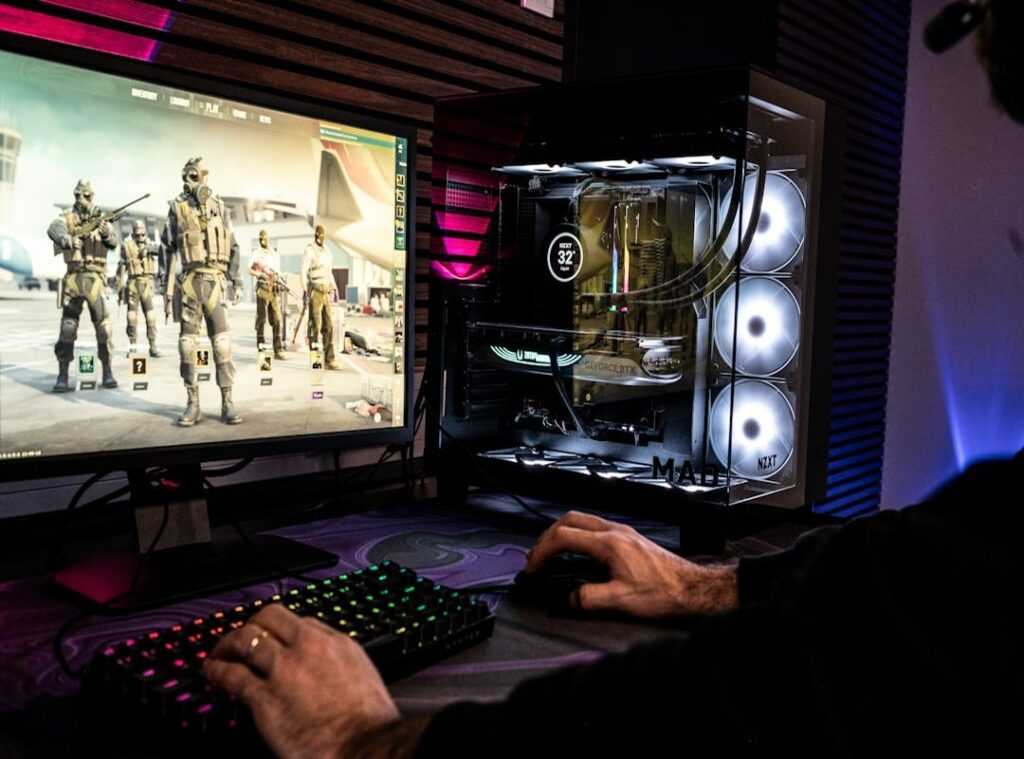

Ever feel like you’re stuck in a rut with your favorite game? You know, when you’re good but not great? That’s the skill ceiling laughing at you.
Going from a casual player to a serious competitor is like trying to jump the Grand Canyon. It’s daunting. Raw talent isn’t enough.
I’ve spent years dissecting pro gameplay, pulling apart what really sets the top 1% apart. Spoiler: It’s not just about fast reflexes. It’s about understanding the mental game and practicing smart.
We’re talking about esports tactics that work no matter what game you’re into.
This guide will give you a roadmap to thinking like a pro rather than just playing like one. Ready to level up? Let’s get into it.
Mastering the Mental Meta: Your Brain is the Best Controller
Ever felt like your brain was stuck on a loop, sabotaging your gameplay? Welcome to the world of the “mental game.” It’s the backbone of all competitive success. Without mastering it, you’re just mashing buttons.
But here’s a pro tip: reset your focus with a simple 3-second breathing exercise. Inhale, hold, exhale. Do it between rounds or after every death.
Let’s talk about “tilt”. You know, that moment when you’re seeing red after a bad play. It happens to everyone.
It’s like hitting the reset button on your brain.
Now, consider the difference between a growth mindset and a fixed mindset. With a fixed mindset, you blame the game or your teammates. But with a growth mindset, you ask, “What could I have done differently?” It shifts your focus to improvement.
Then there’s “game sense.” It’s not some magical talent. It’s a skill built through active observation. Picture this: you’re predicting an enemy’s flank in an FPS based on sound cues and their last known position.
Or anticipating a gank in a MOBA by keeping an eye on the minimap.
Want more takeaways? Check out these case studies winning esports strategies for practical examples. You’ll see how top players use these tactics to dominate.
Smarter, Not Harder: Mastering Practice with Purpose
Ever heard of “grinding” in games? It’s that endless loop of playing for hours, hoping to magically get better. Spoiler: it doesn’t work.
Instead, I swear by deliberate practice. It’s all about focusing on specific skills. Take FPS games, for example.
Using an aim trainer is great, but don’t just scatter your efforts. Spend 15 minutes on one skill, like tracking or flick shots. You’ll see improvement faster than you think.
In MOBAs or RTS games, don’t just play mindlessly. Pick one mechanic and own it. Focus on last-hits or managing resources.
These little adjustments can make a huge difference. And in fighting games, training mode is your best friend. Spend 20 minutes perfecting that one tricky combo.
Muscle memory will thank you later.
Here’s another tip: VOD reviews. They sound fancy, but it’s just watching your own replays. Look for unforced errors, bad positioning, and those missed opportunities.
It’s like a self-coaching session. Simple but effective.
If you’re serious about gaming, understanding esports tactics is key. It’s not just about playing more. It’s about playing smarter.
So ditch those endless hours of grinding and embrace a more focused approach. You’ll thank yourself when you start seeing real progress.
Decoding the Meta: Gaming’s Secret Playbook
So, what’s the meta? It’s like the game’s unofficial rulebook. It tells you which characters, weapons, or strategies are dominating right now. Mastering the meta is key.
Think of it as the hidden code that top players crack to win. But how do you even find this hard to find meta?
You start by watching top streamers or pros. They’re like the fortune-tellers of gaming, predicting what will work next. Reading patch notes helps too.
These updates can flip the meta overnight. And don’t forget community data sites. Imagine a place where game stats are crunched into easy-to-read takeaways.
Ever heard of stat-tracking sites? That’s what I’m talking about.
But here’s the kicker. Sometimes you don’t follow the meta, you break it. Introducing “counter-picking.” If everyone’s dashing around with fast, aggressive tactics, try turtling.
Slow, steady, and defensive wins the race. It’s like a chess game. You either master the meta or break it.
Esports tactics hinge on this dance of conforming and countering. For an edge in competitive play, coordinating team plays esports can be your ace. But the core idea remains: being aware of the meta is non-negotiable.
Ignore it, and you’re toast.
Whether you follow or defy it, the choice is yours.
Beyond the Ping: Next-Level Team Communication
Let’s face it, using a mic is basic. To really level up, you need quality communication. It’s all about the 3 C’s: Clear, Concise, and Calm.
Take callouts, for example. “Enemy sniper, top-mid window” beats “WATCH OUT, GUY OVER THERE!” every single time. It’s not just about yelling what’s happening. Communicate intent.
Say something like, “I’m using my ultimate in 5 seconds, get ready to push.” That’s smart esports tactics.
Ever notice how teams flounder without a leader? a shot-caller comes in. Even in pickup groups, having one person suggest the main objective (like “Let’s attack point B now”) can prevent chaos. It’s not about being bossy, it’s about direction.
One voice guiding many.
And hey, don’t underestimate the power of in-game pings. They’re not just cute little blips. Use them to supplement voice chat for quick, important info.
A ping followed by a clear callout? That’s next-level combo.
So, do you see the difference? It’s not just about talking. It’s about communicating with purpose.
Stop the noise, start the conversation. Want to really make an impact in your team? Focus on how and what you’re saying.
Winning the Mid-Game: When Plans Go Bust
Ever been in a match where your original plan gets obliterated? Yeah, me too. It happens.
So, what’s the move? First, figure out why it’s failing. Maybe their team comp just countered yours.
Or you blew the early resource fight and now you’re limping along. Whatever it is, get clear on the problem.
This is where the “strategic pivot” comes in. In a hero-based shooter, if your dive comp isn’t cutting it, switch to a more defensive bunker comp. Slow the game down, mess with the enemy’s rhythm.
Make them make mistakes, not you.
Take a real-time plan game. Your initial rush got smacked down? Time to pivot.
Go defensive, tech up, aim for a late-game powerhouse army. Adaptation is what separates the good from the great. You know it, I know it.
The esports pros live it.
Adaptability isn’t just a bonus in esports tactics. It’s important. Panic never wins games; plan does.
Change direction mid-game and watch your opponents scramble. Ever seen them do that? Feels good, right?
So next time your plan falls apart, don’t just sit there. Pivot. Adjust.
Win. That’s the secret sauce. It’s about staying cool and making the right call when everything feels wrong.
Start Climbing Now
Feeling stuck? We’ve all been there. But you’re armed with a plan now, right?
You’ve got mental grit, deliberate practice, and strategic smarts. Break that skill plateau. Why does this work?
It’s all about combining mental toughness with actionable strategies. That’s your ticket to improvement. So, here’s what you do next.
Load up your game. Pick one of these esports tactics. Focus on it for your next session.
This isn’t just theory; it’s your first step to the top. Need proof? Check out doatoike.com for the latest on gaming buzz and strategies.
Start your climb. You got this.
 There is a specific skill involved in explaining something clearly — one that is completely separate from actually knowing the subject. Kathleen Vineswaren has both. They has spent years working with core game mechanics and strategies in a hands-on capacity, and an equal amount of time figuring out how to translate that experience into writing that people with different backgrounds can actually absorb and use.
Kathleen tends to approach complex subjects — Core Game Mechanics and Strategies, Daily Gaming Setup Hacks, Expert Breakdowns being good examples — by starting with what the reader already knows, then building outward from there rather than dropping them in the deep end. It sounds like a small thing. In practice it makes a significant difference in whether someone finishes the article or abandons it halfway through. They is also good at knowing when to stop — a surprisingly underrated skill. Some writers bury useful information under so many caveats and qualifications that the point disappears. Kathleen knows where the point is and gets there without too many detours.
The practical effect of all this is that people who read Kathleen's work tend to come away actually capable of doing something with it. Not just vaguely informed — actually capable. For a writer working in core game mechanics and strategies, that is probably the best possible outcome, and it's the standard Kathleen holds they's own work to.
There is a specific skill involved in explaining something clearly — one that is completely separate from actually knowing the subject. Kathleen Vineswaren has both. They has spent years working with core game mechanics and strategies in a hands-on capacity, and an equal amount of time figuring out how to translate that experience into writing that people with different backgrounds can actually absorb and use.
Kathleen tends to approach complex subjects — Core Game Mechanics and Strategies, Daily Gaming Setup Hacks, Expert Breakdowns being good examples — by starting with what the reader already knows, then building outward from there rather than dropping them in the deep end. It sounds like a small thing. In practice it makes a significant difference in whether someone finishes the article or abandons it halfway through. They is also good at knowing when to stop — a surprisingly underrated skill. Some writers bury useful information under so many caveats and qualifications that the point disappears. Kathleen knows where the point is and gets there without too many detours.
The practical effect of all this is that people who read Kathleen's work tend to come away actually capable of doing something with it. Not just vaguely informed — actually capable. For a writer working in core game mechanics and strategies, that is probably the best possible outcome, and it's the standard Kathleen holds they's own work to.